

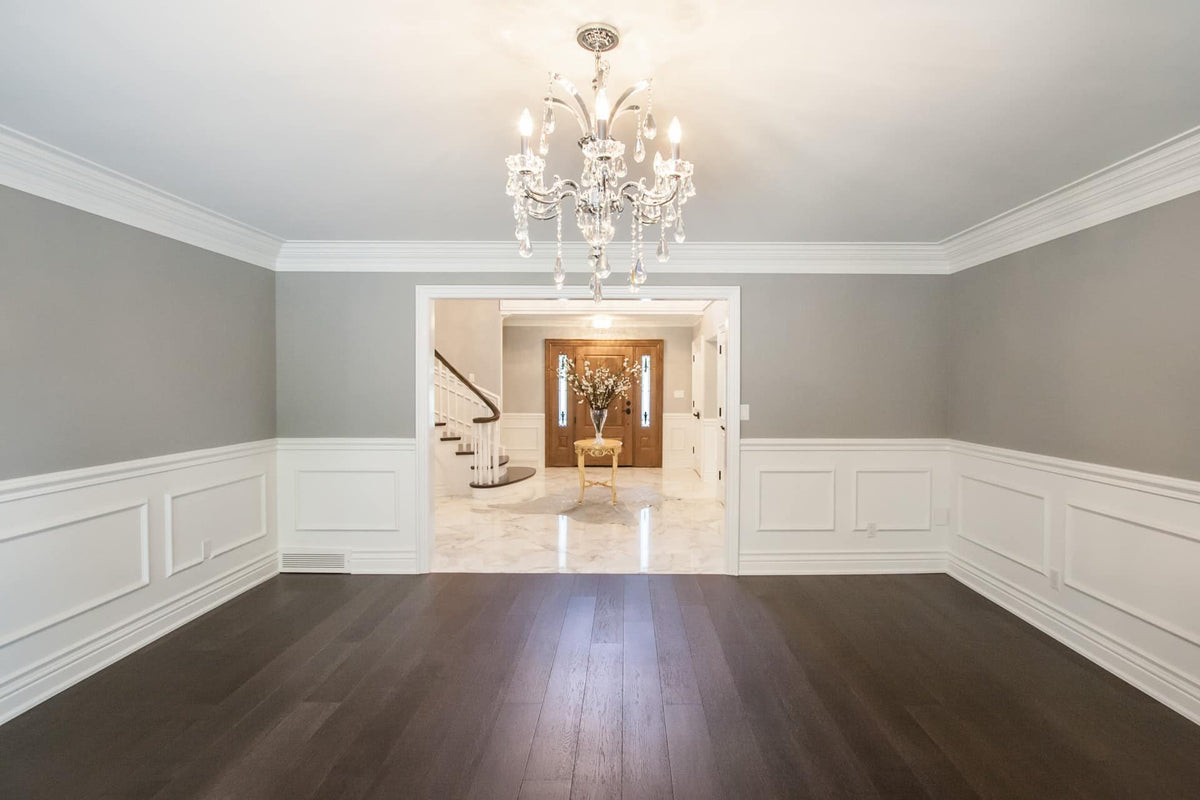
The lines that finish a room
Casing, door stop and baseboard, plus every other piece of trim you will hear about, explained in plain words.
Shop TrimTrim is the broad name for the finishing boards that cover the joints and edges inside a home: where a door or window frame meets the wall, where the wall meets the floor, and where the wall meets the ceiling. It hides the gaps that framing and drywall leave behind and sets the style of a room. Builders also call it moulding. Exos Door carries the three kinds that finish an interior door.
Casing
Frames a door or window. Covers the gap between the frame and the wall. We carry it.
Door Stop
The thin strip inside the frame that the door closes against. We carry it.
Baseboard
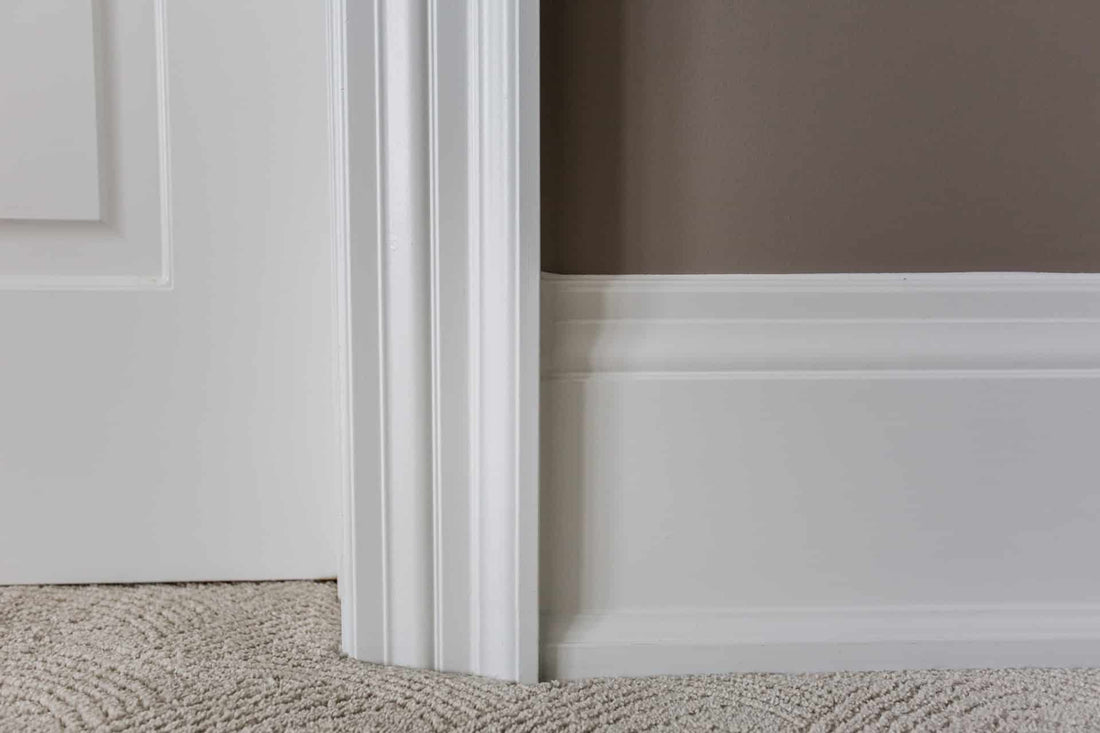
Runs along the bottom of the wall at the floor. Usually the widest trim in a room. We carry it.
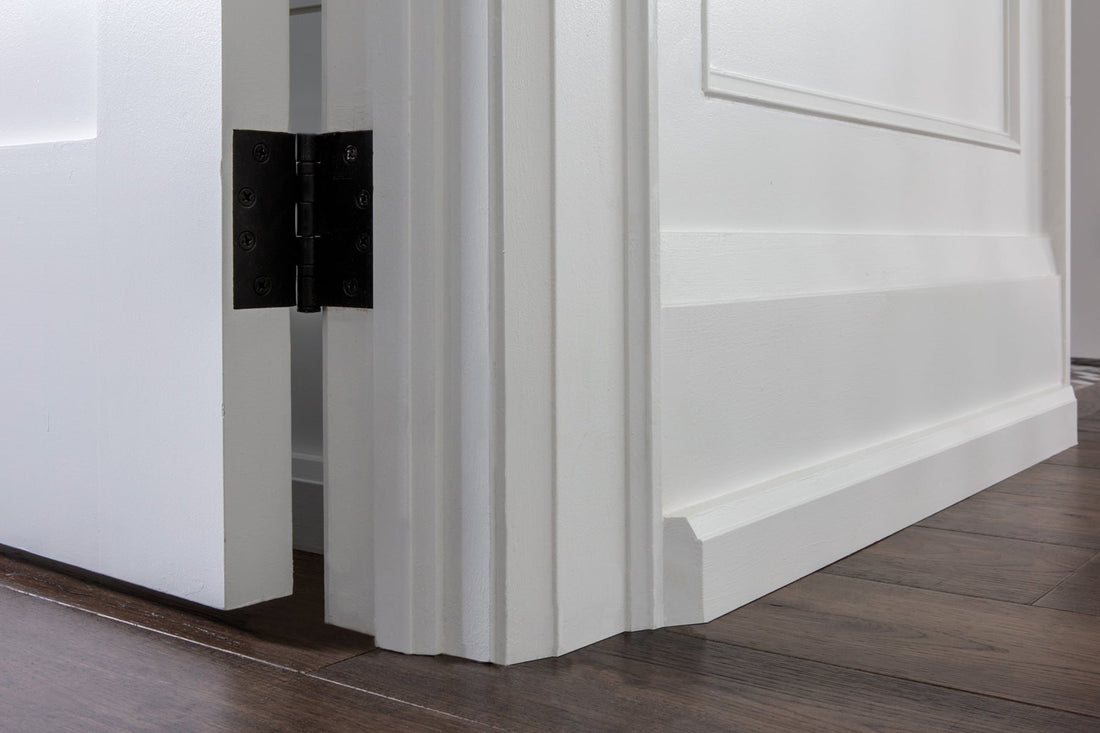
Trim Around A Door
Tap a number to see what each piece is called, what it does and whether we carry it.
Pick a part
Tap A Number
Each piece around a door has a name and a job. Tap a numbered dot or a label to see what it is called, what it does and whether we carry it.
Trim Around The Room
The rest of the vocabulary. We do not stock these, but you will hear the words from contractors, designers and listings.
Pick a part
Tap A Number
Crown, chair rail, wainscoting, mantel: tap any numbered dot or label to see what it is and where it goes.
Trim Glossary, A To Z
Every term from the drawings plus the parts of the door itself. Open any entry.
Apron
The piece of trim fixed to the wall directly under the window stool. It finishes the bottom of the window the way casing finishes the sides.
Not something we stock
Architrave
The main top piece over a door or window opening, usually heavier and more detailed than the side casing. Some people use the word for the whole set of casing around an opening.
Not something we stock
Backband
An extra moulding added to the outer edge of casing to make it thicker and give the opening a more built-up, traditional look.
Not something we stock
Baseboard We carry this
The board along the bottom of the wall where it meets the floor. It covers the joint between the drywall and the flooring and takes the knocks from feet, vacuums and furniture, so it is usually the widest trim in a room. The shaped edge goes at the top; the flat edge sits on the floor.
We carry this: shop baseboard
Casing We carry this
The flat board that frames a door or window opening. It covers the gap between the jamb (the frame) and the drywall, and it is usually narrower than baseboard. Most profiles have one thinner, shaped edge and one thicker edge: the thinner edge sits against the frame, the thicker edge faces the wall. Corners are usually mitred, which means each piece is cut at 45 degrees so the two meet in a neat diagonal line.
We carry this: shop casing

Chair Rail
A horizontal moulding that wraps the room about a third of the way up the wall. The name comes from keeping chair backs off the plaster; today it mostly caps wainscoting or splits a wall into two colours.
Not something we stock
Corner Block
A square decorative block at the top corners of door or window casing. The side pieces and the head piece butt into it, so there is no mitre to cut.
Not something we stock
Crown Moulding
Trim along the top of the wall where it meets the ceiling. It is set at an angle so it bridges the two surfaces, and it is purely decorative.
Not something we stock
Door Parts: Stiles, Rails, Panels, Mullions
The door itself has names too. Stiles are the two outer vertical pieces. Rails are the horizontal pieces: the top rail, the bottom rail, a cross rail (also called an intermediate rail) between them, and the lock rail, which is the one the handle sits in. Panels are the flat or raised sections set between them. Mullions are the short vertical pieces that split a wide panel into two.
We carry doors: shop interior doors
Door Stop We carry this
The thin strip nailed to the jamb that the door closes against. It stops the door swinging through the opening and gives the latch something to pull the door snug against. A plain jamb comes without it, and so do our door and frame kits, so add it to your order.
We carry this: shop door stop
Finger Joint Pine
Solid pine made from shorter pieces joined end to end with interlocking fingers, then glued, so a long length has no knots. Some of our trim comes in it.
Fluted Pilaster
A flat, column-like piece of trim with vertical grooves (the flutes) that frames the sides of a door, window or fireplace.
Not something we stock
Frieze
A flat band fixed to the wall just under the crown moulding. It makes the crown look taller and more built-up.
Not something we stock
Head Casing
The piece of casing across the top of the opening. It is the same board as the side casing, cut to length, with its corners mitred to meet the side pieces.
Same board as casing: shop casing
Jamb We carry this
The frame the door hangs in: two side boards and a head board that line the opening. The hinges screw into one side and the latch catches on the other. The jamb is not trim, but every piece of door trim attaches to it or sits beside it.
We carry this: shop door jambs or read about jambs
Lock Set Or Passage Set
The handle. A passage set turns but never locks (hallways, closets). A privacy set locks from the inside (bedrooms, bathrooms). A dummy is a fixed pull that does not turn.
We carry handles: shop hardware
Mantel
The shelf across the top of a fireplace surround. Usually the focal point of the room it is in.
Not something we stock
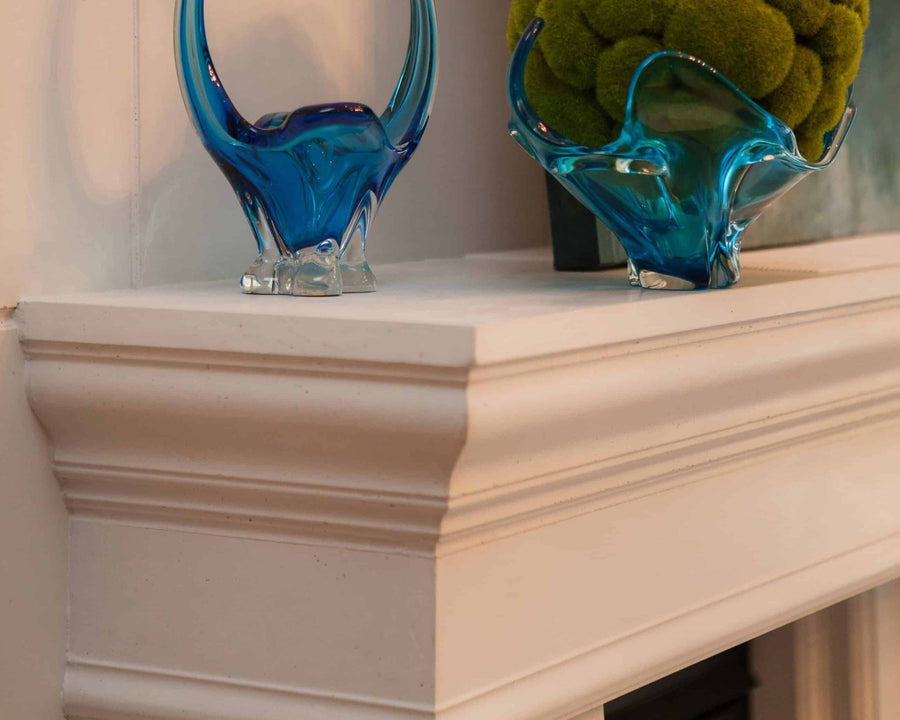
MDF
Medium density fibreboard: wood fibre pressed with resin into a smooth, uniform board with no grain and no knots. Most of our trim is MDF, primed and ready for paint.
Mitre
A joint where two pieces are each cut at 45 degrees so they meet in a clean diagonal line at a corner, the way a picture frame does. Casing corners and outside corners of baseboard are usually mitred.
Moulding
Another word for trim: a strip of wood or MDF shaped to a profile. Trim, moulding and millwork all get used for the same boards.
Outside Corner
A moulding that caps the outside corner of a wall, the kind that sticks out into the room and gets bumped. It covers the raw drywall edge.
Not something we stock
Panel Moulding
Strips of moulding fixed to a flat wall in rectangles to create the look of panels without any real panelling behind them.
Not something we stock
Panel Wainscoting
Panelling on the lower part of the wall, the part that gets kicked and scuffed. It is decorative and it protects the wall, and it is usually capped by a chair rail.
Not something we stock
Plate Rail
A narrow shelf that runs around the upper part of a room, originally for standing plates and ornaments on display.
Not something we stock
Plinth Block
A small block at the foot of the casing, a little thicker and wider than both the casing and the baseboard, so each can butt into it instead of meeting at an awkward joint. A traditional detail.
Not something we stock
Primed
Already coated with a white base layer that helps paint stick, so you can go straight to your colour. Our trim marked Primed comes this way; raw trim needs a coat of primer first.
Profile
The shape cut into the face and edges of a piece of trim, seen best from the end. Profiles are how trim styles get their names: Colonial, Contemporary, Modern Farmhouse, Eased Two Edges.
Reveal
The narrow strip of jamb edge, about 1/4 inch, left showing between the casing and the inside of the frame. Casing is set back from the jamb edge on purpose: it leaves room for the hinges and the door stop and gives a crisp shadow line.
Shoe Moulding
A small strip along the bottom of the baseboard that hides any gap between the baseboard and the floor. Quarter round does the same job. Not every home has it.
Not something we stock
Tongue And Groove / Beadboard
Planks with a tongue on one edge and a groove on the other that lock together into one flat surface. Beadboard is the version with a rounded line at each joint. Used on whole walls, accent walls or the lower part of a wall.
Not something we stock
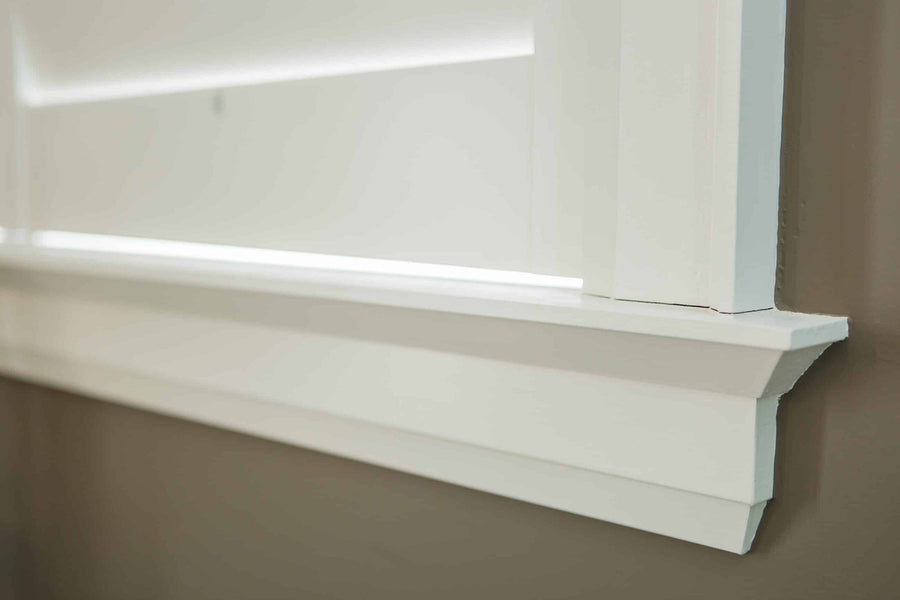
Window Stool
The flat ledge at the bottom of a window, the part people set plants on. Most people call it the sill; the stool is the inside piece of trim. Casing a window starts with the stool.
Not something we stock
The Profiles We Carry
A profile is the shape along the edges of the board. Pick one and keep it the same through a room.
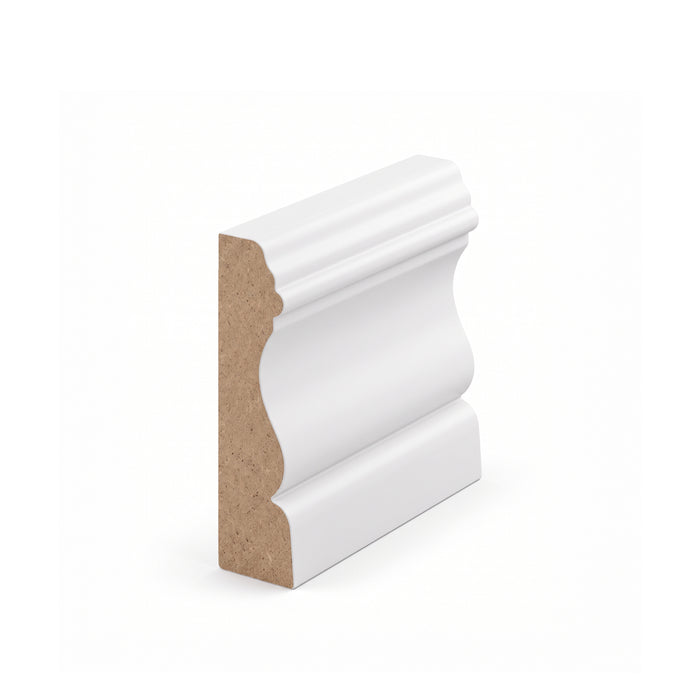
Colonial
A plain flat strip along the thinner edge, then soft curves out to a rounded, stepped detail along the thicker edge.
Shop this profile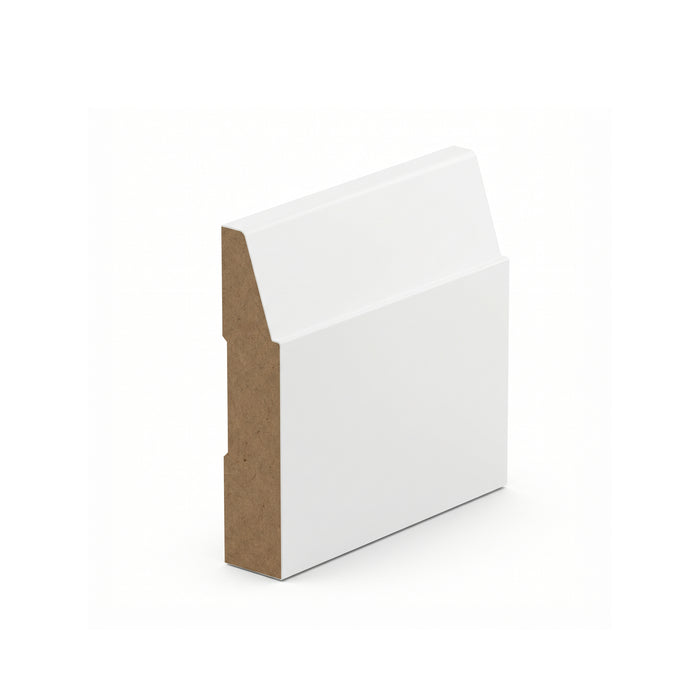
Contemporary
A flat face with a small step, then a straight slope down to the thinner edge. The other edge is thicker and square.
Shop this profile
Modern Farmhouse
A flat face with one long edge rounded over, no step. The other edge is thicker and square.
Shop this profile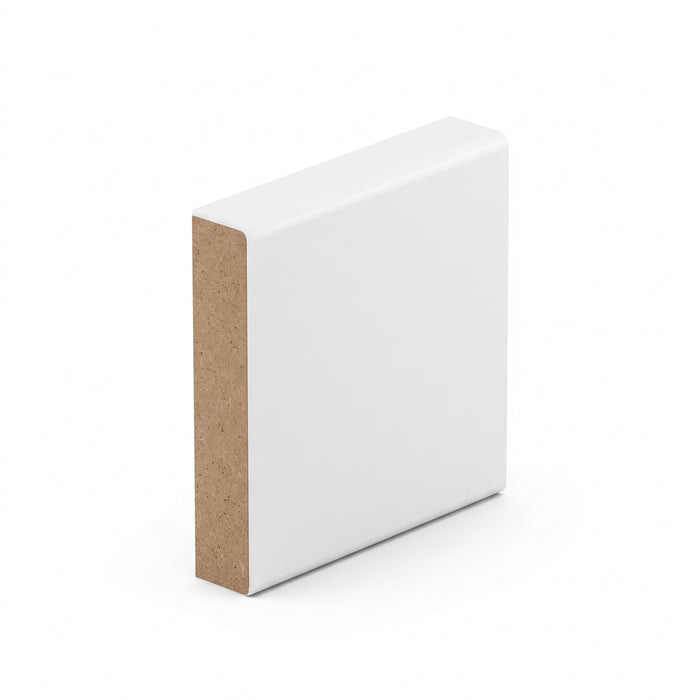
Eased Two Edges
A flat board with both long edges softly rounded. The same both ways, so there is no wrong way round.
Shop this profileDoor stop comes in Colonial, Contemporary and Eased Two Edges, and baseboard in Colonial and Contemporary (plus a flat board with eased edges), so a whole room can match.
Which Way Round It Goes
Two rules that save a lot of re-cutting. Both drawings show the end of a board.
Casing: Thin Edge To The Frame
The thinner, shaped edge always sits against the jamb (or the window frame). The thicker edge faces out onto the wall. Set the casing a little back from the face of the jamb, usually about 1/4": that small step is called the reveal. Eased Two Edges casing is the same both ways, so there is no wrong way round.
Baseboard: Shaped Edge Up
The curved or stepped edge goes at the top where you see it. The flat, square edge sits on the floor. The width of the board is how far it stands up the wall.
How Much Do I Need?
A planning estimate. Pieces are sold full length, so always measure your openings and walls before you order.
Materials And Finish
MDF
Medium density fibreboard: a smooth, uniform engineered board with no grain and no knots. Takes paint evenly.
Finger Joint Pine
Solid pine joined from shorter pieces, so long lengths come without knots. Also paint-grade.
Primed Or Raw
Pieces marked Primed arrive with a white base coat, ready for your colour. Raw pieces need a coat of primer first.
Every piece is sold full length, 12, 14 or 16 ft depending on the product. Items marked Clearance are final sale and gone once they sell out.
Questions People Ask
Do I put casing on both sides of a doorway?
Yes. A doorway is cased on both faces of the wall, which is why one standard door takes four uprights and two headers, about three 14 ft pieces.
Can the pieces be cut shorter so they fit in my car?
Trim is sold full length: 12, 14 or 16 ft depending on the product. Bring a vehicle that can carry the length, or choose delivery and we bring it to you.
Does a door and frame kit include door stop or casing?
No. Kits and plain jambs come without door stop and without casing. Add both to your order so the frame can be finished the same day.
Is the finger joint pine baseboard primed?
No. It is raw wood, so give it a coat of primer before paint. Every item with Primed in its name arrives with the white base coat already on.
Can I use MDF trim in a bathroom?
Yes, as long as it is sealed. MDF swells if it soaks up water, so prime and paint every face and edge, caulk the top edge, and keep it off floors that stay wet.
What is a reveal?
The narrow strip of jamb edge, about 1/4 inch, left showing between the casing and the inside of the frame. Casing is set back on purpose: it leaves room for the hinges and the door stop and gives a crisp shadow line.
Finish Every Edge In One Trip
Casing, door stop and baseboard in matching profiles, primed and ready for paint, from the same place as your doors.